Different Types of Toothbrushes

Different Types of Toothbrushes

Picking the right toothbrush isn’t about finding the most expensive model. It’s about matching the brush to your mouth, your habits, and what your gums can handle. A poor choice can lead to worn enamel or irritated gums, while the right one makes cleaning practically effortless.

Why Choosing the Right Toothbrush Matters More Than You Think

Your toothbrush is your primary defense against plaque, the sticky film that causes cavities and gum disease. The wrong brush can do more harm than good.

Choosing a brush with bristles that are too firm or a head that is too large can lead to real problems. You may not notice the damage until your dentist points out the signs.

Here is what happens when the brush doesn’t fit the mouth:

  • Gum recession: Hard bristles and aggressive scrubbing wear away the delicate gum tissue, exposing sensitive roots.
  • Enamel abrasion: Over time, harsh brushing can literally scrape grooves into your tooth enamel.
  • Incomplete plaque removal: A head that is too bulky can’t reach behind back molars or between teeth, leaving plaque behind to cause decay.

Manual vs. Electric Toothbrushes: What’s the Core Difference?

The first big decision is between a manual toothbrush and an electric toothbrush. Both can clean teeth effectively, but they work quite differently and require different things from the user.

A manual brush relies entirely on your technique. The motion, angle, and pressure all come from your hand. An electric brush, on the other hand, automates the cleaning motion. The tiny, rapid movements do the scrubbing work for you, so you only need to guide the brush.

Here is a straightforward comparison to lay out the facts:

Feature Manual Toothbrush Electric Toothbrush
Cleaning Mechanism User-generated scrubbing motion Automated oscillation, rotation, or vibration
Cost Low ($1–$5 per brush) High ($30–$300+ for the handle, plus replacement heads)
User Effort High; requires meticulous technique Low; you just guide the brush and let it do the work
Key Features None standard Built-in two-minute timers, pressure sensors, multiple cleaning modes
Clinical Evidence Effective with flawless technique On average, removes more plaque and reduces gingivitis more effectively over time, largely because it compensates for imperfect technique
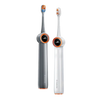
A clean, minimalist flat-lay photograph. A manual toothbrush with a bamboo handle lies parallel to a sleek, white electric toothbrush with a charging base. The composition is bright, with a warm daylight studio feel and a neutral background.

Detailed Breakdown of Manual Toothbrush Types

The manual toothbrush aisle is deceptively complex. The physical design—from the bristles to the shape of the head—is tailored for different needs.

Bristle Hardness Levels: Soft, Medium, and Hard

Dental professionals overwhelmingly recommend soft bristles. You do not need stiff bristles to remove plaque; soft bristles effectively wipe away the sticky film while bending to clean just under the gumline without causing trauma.

  • Soft: Ideal for nearly everyone. It cleans effectively while minimizing the risk of damage to gums and enamel wear. The American Dental Association (ADA) consensus recommends brushing twice a day with a toothbrush that has soft bristles.
  • Medium: These bristles are stiffer. They might be considered for denture cleaning but are generally too abrasive for natural teeth and gums.
  • Hard: Not recommended. Hard bristles, combined with a forceful brushing technique, can accelerate gum recession and enamel abrasion.

Head Shape and Size: Full-Size, Compact, and Child-Specific Heads

The toothbrush head size determines how easily you can reach every surface in your mouth. A smaller head is almost always the better choice.

A compact head is typically about half an inch wide and one inch long. This smaller size is highly maneuverable, making it much easier to reach the outer surfaces of your back molars and clean behind your very last tooth, an area that’s often missed and prone to cavities. A full-size head might feel like it covers more area, but it often fails to access these tight spots. For children, a child-specific head is essential; it is proportioned to fit their small mouths and developing teeth comfortably.

Bristle Pattern Designs: Flat, Wavy, Crisscross, and Multi-Level

The layout of the bristles is not just for looks. These patterns are engineered to clean tooth surfaces more effectively.

Bristle Pattern Cleaning Advantage Best For
Flat Trim Provides even, uniform contact with teeth. A standard, basic, all-purpose cleaning.
Wavy or Rippled Designed to fit the natural curve of the teeth for more surface contact. People who want a little extra contouring.
Crisscross Angled bristles reach deeper between teeth. Those who need enhanced interdental cleaning but don’t floss every time.
Multi-Level or Angled Bristle tips of different heights clean flat surfaces and between teeth at the same time. One systematic review found these designs perform better at plaque removal than conventional flat-trimmed bristles. Users who want a single-tool solution for a more thorough clean.

Specialized Manual Toothbrushes for Orthodontics, Dentures, and Sensitive Gums

Some manual brushes solve very specific problems.

  • Orthodontic Brush: These have a V-shaped bristle pattern with shorter inner rows and longer outer rows. This design is built to clean above, below, and around brackets and wires simultaneously.
  • Denture Brush: This is a two-sided brush. One side has a flat, wider bristle field for cleaning the smooth surfaces of a denture, and the other side is a smaller, tapered tuft for getting into the nooks and crannies of the appliance.
  • Ultra-Soft or Sensitive Gum Brush: Featuring an extremely high density of ultra-fine, polished bristle tips, these brushes are for people with severe gum recession or those recovering from gum surgery. They clean with minimal mechanical abrasion.

Comprehensive Guide to Electric Toothbrush Types

Electric toothbrushes can be divided by their cleaning technology. Understanding how they work is the key to picking the right one.

How Oscillating-Rotating Toothbrushes Work and Who They Benefit

An oscillating-rotating toothbrush uses a small, round head that rapidly rotates back and forth, cleaning one tooth at a time. This design is excellent for intricate, tooth-by-tooth navigation, allowing you to precisely follow the shape of each tooth and clean along the gumline.

The mechanism is backed by strong clinical evidence. These brushes have been shown to offer a small but statistically significant advantage in plaque and gingivitis reduction compared to sonic brushes in some head-to-head studies analyzed in a 2023 review, making them a powerful tool if you want the most thorough mechanical cleaning per tooth. They are an ideal upgrade for anyone transitioning from a manual brush who wants a dentist-like, targeted clean. People with implants, crowns, or bridges often benefit from the focused cleaning an interdental brush provides alongside this type of brush.

Sonic Toothbrushes: Dynamic Fluid Cleaning Action Explained

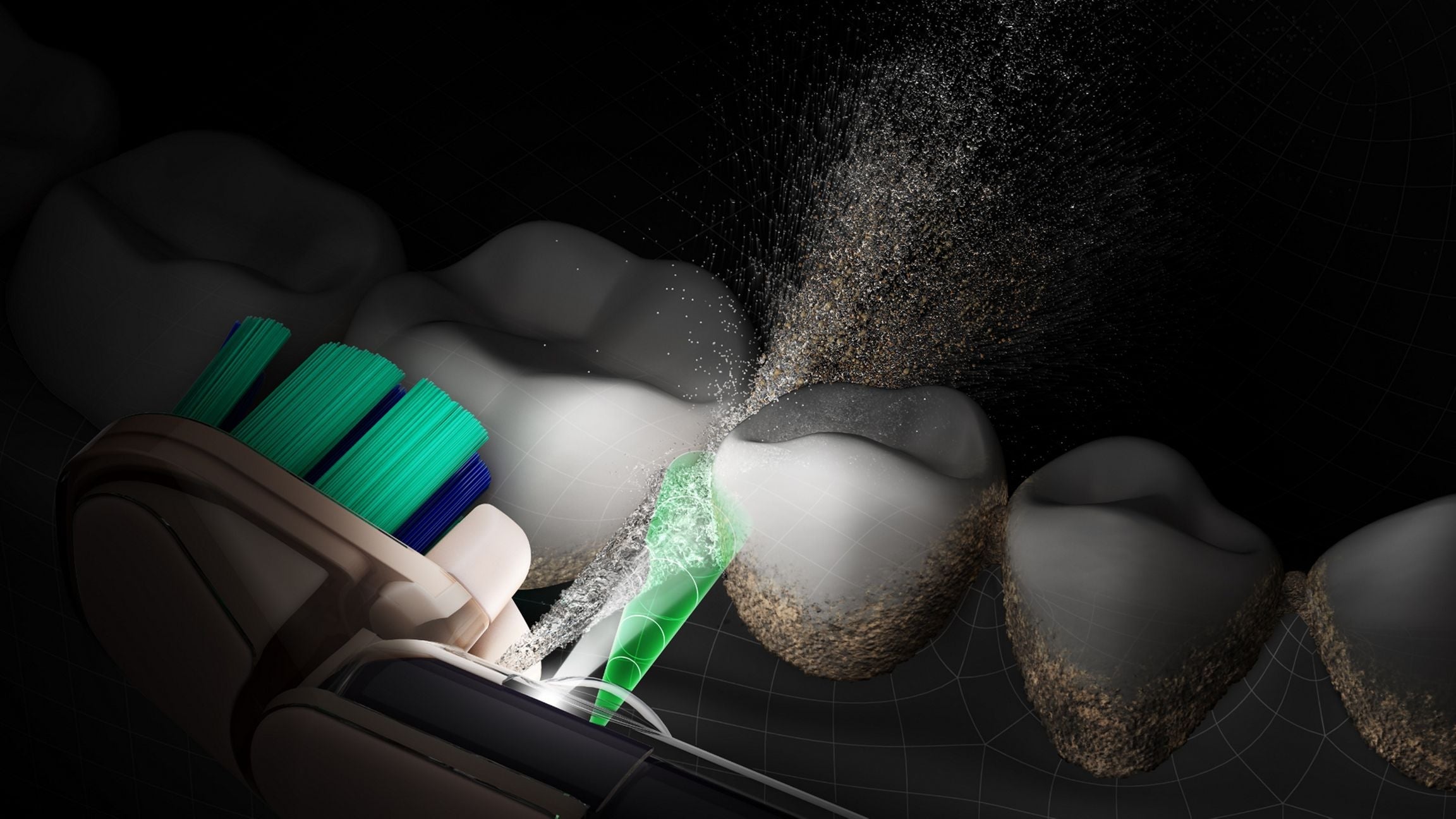
A sonic toothbrush has an oval, brush-like head that vibrates side-to-side at incredibly high speeds, typically delivering over 30,000 strokes per minute. This speed creates a “dynamic fluid cleaning action,” which means the high-frequency vibrations agitate the saliva, water, and toothpaste into a pulsating fluid that can reach slightly beyond the physical bristle tips.

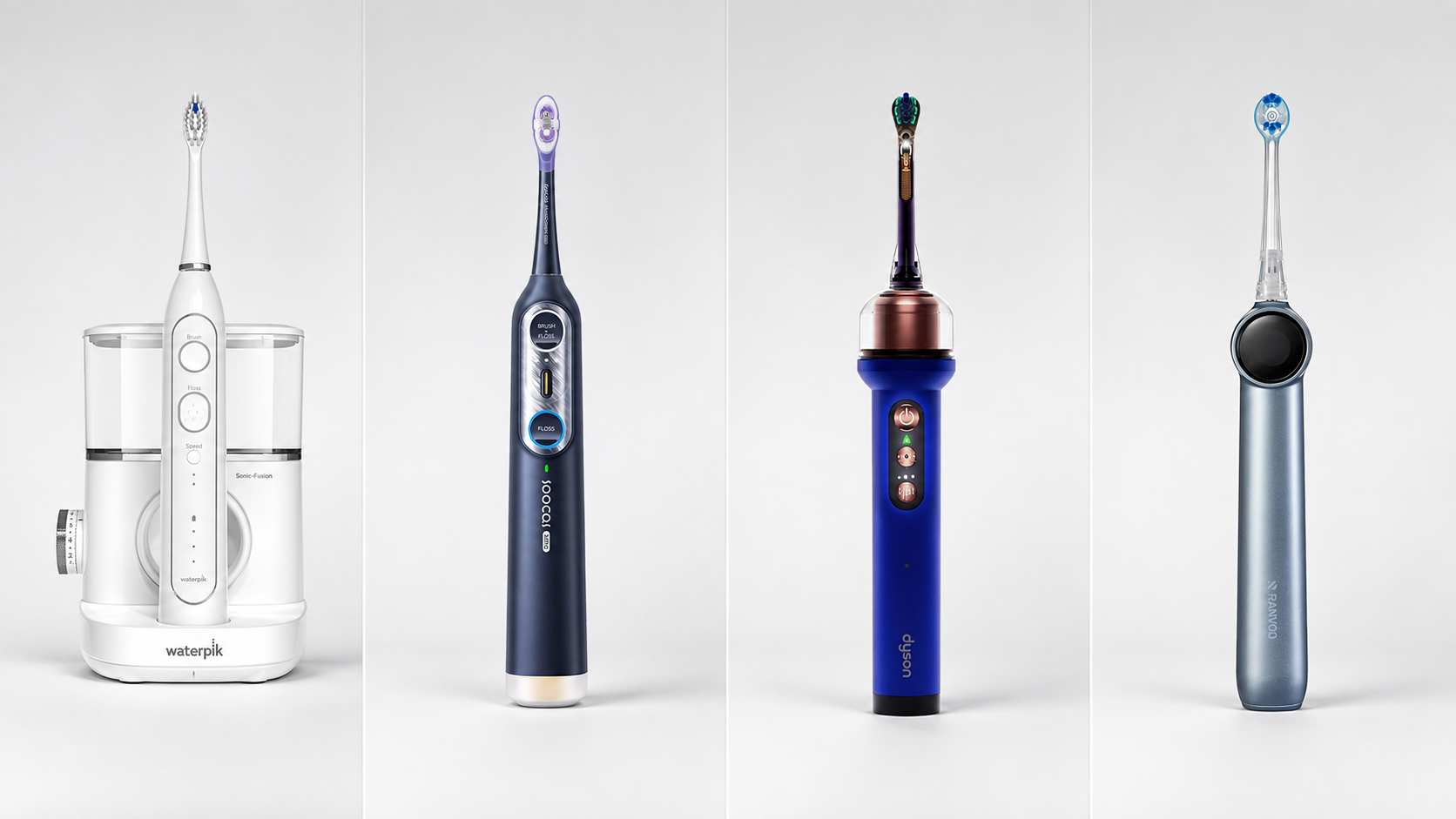
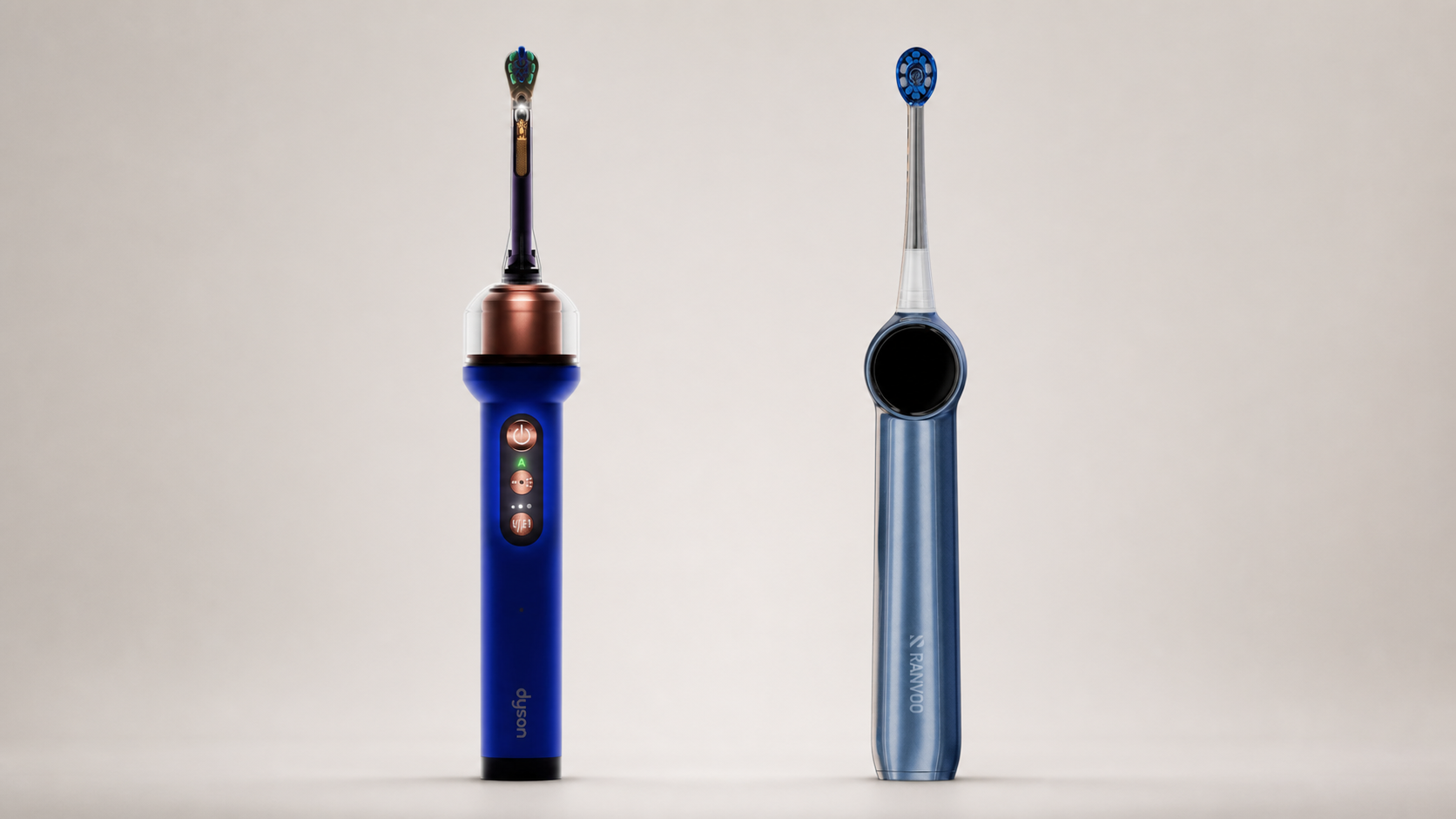
For those who worry about damaging sensitive gums or enamel, this fluid action offers a gentler alternative to mechanical scrubbing—and some modern sonic brushes take it even further. The RANVOO AirJet X5, for example, uses a patented “AirJet” technology that generates millions of microbubbles through precise sonic vibrations. These bubbles gently implode upon contact with tooth surfaces, dislodging plaque without any abrasive bristle pressure. It’s essentially a hands-free, non-contact cleaning approach that eliminates the risk of over-brushing, making it an ideal choice for anyone who’s ever been told they brush too hard or who experiences bleeding gums. The fluid action also helps the bubbles reach deep into the gumline and between teeth, areas often missed by ordinary brushes.

The sensation is generally smoother and less ticklish than traditional sonic brushes, which can be a game-changer for people with sensitive teeth, a strong gag reflex, or gum recession. With built-in pressure sensors and a dedicated sensitive mode, the AirJet X5 actively prevents you from pressing too hard—a common cause of gum damage.

A close-up, high-speed photography shot of a sonic toothbrush head submerged in clear water. Millions of tiny bubbles are visibly pulsating around the bristles, illustrating the dynamic fluid cleaning action. The setting is a clean, bright bathroom with soft blue and white tones.

Ultrasonic Toothbrushes: The Next Step in Plaque Disruption

Where sonic technology stops, the ultrasonic toothbrush begins. These use a piezoelectric crystal to vibrate at an astonishing frequency, around 1.6 MHz—roughly 192 million movements per minute. They don’t rely on a scrubbing motion; instead, they generate sound waves to disrupt bacterial biofilm through cavitation, a mechanical process of forming and imploding microscopic bubbles to dislodge plaque.

This makes them one of the gentlest options available, as they require almost no brushing pressure. They are a niche but valuable choice for people with extremely sensitive gums or dental implants and for those who want to leverage a maximum-technology approach to oral care.

Ionic Toothbrushes: Do They Really Work?

Ionic toothbrushes work on a different principle. They use a small, low-level electric charge, usually from a battery in the handle, to temporarily reverse the polarity of the tooth surface. The idea is that teeth normally carry a slight negative charge, and plaque is positive. The brush is meant to repel plaque, making it easier to wipe away.

The scientific consensus on their standalone benefit is mixed and less robust than for mechanical action brushes. Some studies suggest they can reduce plaque, but they are not generally considered a replacement for the proven mechanical cleaning power of oscillating-rotating or sonic brushes.

What Toothbrush Type Is Best for Specific Dental Conditions?

The right tool for the job depends entirely on your mouth’s current state. Here is a simple decision-support guide:

Dental Condition Recommended Toothbrush Type Why It Works
Sensitive Teeth & Receding Gums Ultra-soft manual brush or Sonic electric brush with a pressure sensor and “sensitive” mode, such as the RANVOO AirJet X5 with its bubble jet technology. Minimizes gum irritation and enamel wear. The AirJet X5’s non-contact bubbles eliminate abrasive scrubbing entirely, while its pressure sensor stops you from over-brushing and causing further recession.
Braces, Bridges & Restorations Orthodontic manual brush with V-trim bristles or an oscillating-rotating/sonic electric brush. Pair with an interdental brush. The V-trim cleans around brackets, and an electric brush’s motion requires less manual dexterity around hardware. An electric brush is the better routine for these patients.
Young Children Small-head, soft-bristle manual or electric brush with a built-in timer. Use a kid-friendly app if available. A small head fits a small mouth. An engaging timer helps ensure they brush for a full two minutes.
Gum Disease Prevention An oscillating-rotating or sonic electric toothbrush with a “gum care” mode and a pressure sensor. These brushes have the strongest evidence for reducing plaque and gingivitis, which prevents the inflammation that leads to gum disease.

Where and When to Replace Your Toothbrush: The Overlooked Rule

The lifespan of a toothbrush or replacement head is shorter than most people think. There is a clear, evidence-backed rule to follow.

Replace your toothbrush or electric brush head every three to four months, or sooner if the bristles are visibly matted or frayed. The consensus among leading dental organizations like the ADA and FDI World Dental Federation is consistent on this timeline.

A worn brush loses its ability to remove plaque. Frayed, bent bristles don’t scrub effectively and can even be sharp enough to damage your gums. Do not wait for the three-month mark if you can see the wear. This rule applies equally to manual toothbrushes and electric toothbrush heads. A brush should also be replaced immediately after you recover from a cold, flu, or any mouth infection to avoid reinfection.

How to Evaluate Toothbrush Quality Beyond the Type Label

Before you buy, look past the marketing claims. Use this quick, four-point checklist to assess quality instantly:

  1. Check for Bristle Polish: The tips of high-quality nylon bristles are rounded and polished under a microscope. This prevents microscopic scratches. A package label that says “end-rounded” or “polished tips” is a good sign.
  2. Feel the Handle Ergonomics: Hold the brush. A thicker, contoured handle with a non-slip rubber grip provides better control, especially when your hands are wet. A handle design that’s comfortable encourages a lighter, more precise grip.
  3. Verify the Head Size: Confirm it’s a compact head. It should easily reach your last molar without touching the front of your teeth, a clear sign it’s too big for your mouth.
  4. Look for the ADA Seal: The ADA Seal of Acceptance is your guarantee. It means an independent body of scientific experts has evaluated the product and verified that it is both safe and effective at removing plaque and reducing gingivitis.

Sustainable Toothbrush Choices: Materials and Eco-Friendly Types

Most toothbrushes have historically ended up as single-use plastic waste. The industry is now offering better eco-friendly alternatives that don’t compromise on cleaning.

A manual brush with a handle made from sustainably harvested bamboo is one of the most popular swaps. Bamboo is biodegradable and has natural antimicrobial properties. The main downside is that the bristles are almost always still nylon and must be manually pulled out before composting the handle. Another option is handheld bases made from high-content recycled plastics or even aluminum. For electric brush users, the most sustainable choice is to invest in a durable, long-lasting handle and simply change only the replaceable head. This drastically cuts down on the volume of plastic thrown away compared to a fully disposable manual brush, though the handle itself will eventually become electronic waste.

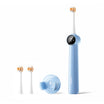
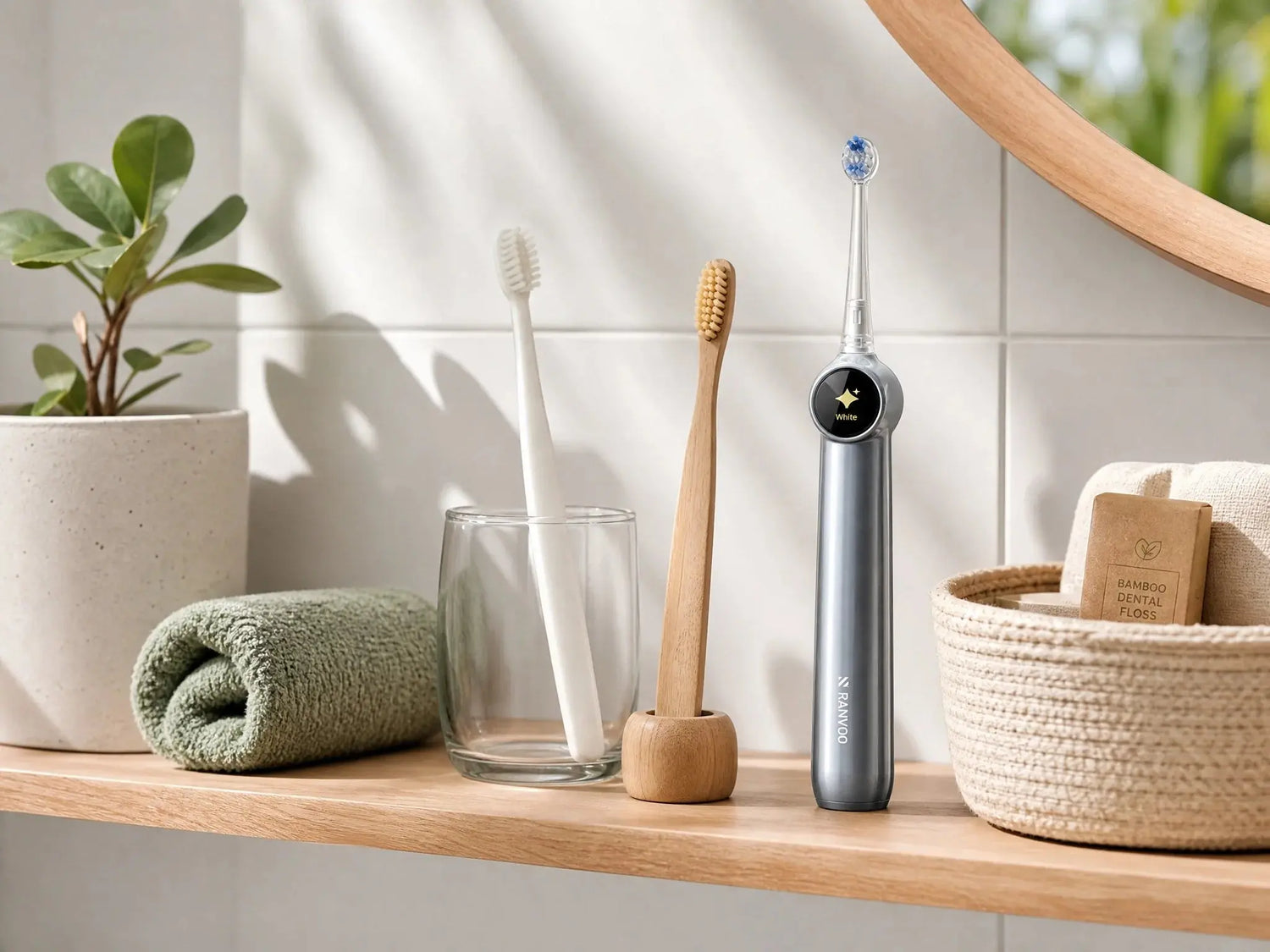
A lifestyle photograph showing a collection of toothbrushes on a clean wooden shelf in a bright bathroom. The lineup includes a traditional plastic brush, a bamboo-handled brush, and a sleek aluminum-handled electric brush with multiple replacement heads nearby, representing a range of sustainable choices.

Your Personalized Toothbrush Selection Checklist

Walk through this simple workflow to make your final decision.

  1. Assess Your Sensitivity: Do your teeth or gums hurt when you brush? If yes, your starting point is a “soft” or “ultra-soft” label. If no, a “soft” bristle is still the safest and most effective recommendation for everyone.
  2. Match to Your Dental Conditions: If you have braces, bridges, or crowding, add an interdental brush to your cart and choose a small-headed electric or orthodontic brush. If you have gum disease, prioritize a brush with a clinically proven track record, like an oscillating-rotating or sonic electric model with a pressure sensor. For sensitive gums or a history of bleeding, consider the RANVOO AirJet X5—its bubble jet technology cleans without touching your gums, making it the gentlest option for problem areas.
  3. Choose Manual or Electric Tier: Be honest about your technique and motivation. If you are diligent and healthy, a soft manual brush is enough. If you have limited dexterity, struggle with technique, or just want a tool that makes the job easier and more effective, choose an electric brush with a two-minute timer and pressure sensor.
  4. Verify Size and Quality: Pick up the brush and check the handle grip. Ensure the head is a compact size that fits easily in your mouth, and always look for the ADA Seal of Acceptance on the box for a final check of safety and efficacy.

FAQs

What happens if I use a toothbrush with hard bristles?

Hard bristles can accelerate gum recession and enamel abrasion, especially if combined with forceful brushing.

How often should I replace my toothbrush?

Replace your toothbrush or electric brush head every three to four months, or sooner if the bristles are visibly matted or frayed. Also replace it immediately after recovering from a cold, flu, or mouth infection.

Should I choose a manual or electric toothbrush?

Both can clean teeth effectively, but electric toothbrushes on average remove more plaque and reduce gingivitis more over time because they compensate for imperfect technique with automated motion and features like timers. Manual brushes require meticulous technique.

What bristle hardness is recommended for most people?

Dental professionals overwhelmingly recommend soft bristles. They clean effectively while minimizing the risk of gum damage and enamel wear.

What toothbrush is best for sensitive teeth and receding gums?

An ultra-soft manual brush or a sonic electric brush with a pressure sensor and 'sensitive' mode is recommended to minimize gum irritation and enamel wear.

How does a sonic toothbrush clean?

A sonic toothbrush uses high-speed vibrations (over 30,000 strokes per minute) to create a dynamic fluid cleaning action, agitating saliva, water, and toothpaste into a pulsating fluid that can reach beyond the bristle tips.

What type of toothbrush is best for braces?

An orthodontic manual brush with V-trim bristles or an oscillating-rotating/sonic electric brush is recommended. Pair it with an interdental brush to clean around brackets and wires effectively.

Can an electric toothbrush help prevent gum disease?

Yes, an oscillating-rotating or sonic electric toothbrush with a 'gum care' mode and a pressure sensor has the strongest evidence for reducing plaque and gingivitis, which helps prevent gum disease.

What is the ADA Seal of Acceptance?

The ADA Seal means an independent body of scientific experts has evaluated the toothbrush and verified it is safe and effective at removing plaque and reducing gingivitis.

Are bamboo toothbrushes an eco-friendly choice?

Yes, bamboo handles are biodegradable and sustainable, but the bristles are usually nylon and must be pulled out before composting the handle.

Why is a compact toothbrush head recommended?

A compact head is highly maneuverable, making it easier to reach the outer surfaces of back molars and clean behind the last tooth, areas that larger heads often miss.

What is an oscillating-rotating toothbrush?

It uses a small, round head that rotates back and forth, cleaning one tooth at a time. It is excellent for precise, tooth-by-tooth cleaning and is backed by strong clinical evidence for plaque removal.

References

How to Choose the Right Toothbrush: A Complete Guide for Healthier Teeth (2026) https://springcreekforestdental.com/how-to-choose-the-right-toothbrush/

How to Choose the Right Toothbrush: A Complete Guide for Healthier Teeth (2026) https://springcreekforestdental.com/how-to-choose-the-right-toothbrush/

Toothbrushes | American Dental Association https://www.ada.org/resources/ada-library/oral-health-topics/toothbrushes

What Type of Toothbrush You Should Use? [Complete Guide 2026] https://www.dentaltales.net/toothbrush/types-of-toothbrushes/

Toothbrushes | American Dental Association https://www.ada.org/resources/ada-library/oral-health-topics/toothbrushes

Electric Toothbrush Guide

View all
Different Types of Toothbrushes

Different Types of Toothbrushes

Picking the right toothbrush isn’t about finding the most expensive model. It’s about matching the brush to your mouth, your habits, and what your gums can handle. A poor choice can lead to worn e...

How to Disinfect a Toothbrush

칫솔 소독하는 방법

Most people don’t need to disinfect their toothbrush daily. Rinsing, air-drying, and regular replacement do the heavy lifting. But after an illness, a drop on the floor, or when someone in the hou...

Do Electric Toothbrushes Cause Gum Recession?

전동 칫솔이 잇몸 퇴축을 유발하나요?

TL;DR: 아니요 — 임상 연구에 따르면 electric 칫솔 잇몸 퇴축을 유발하거나, 올바르게 사용할 경우 이를 악화시키지 않습니다. 오히려 플라크와 치은염 감소에 있어 일반 칫솔보다 더 뛰어난 경우가 많으며, 내장된 압력 센서는 잇몸에 해를 줄 수 있는 과도한 칫솔질을 방지하는 데 도움이 됩니다. 잇몸 퇴축은 대개 사용자의 양치 방법, 유전적 ...