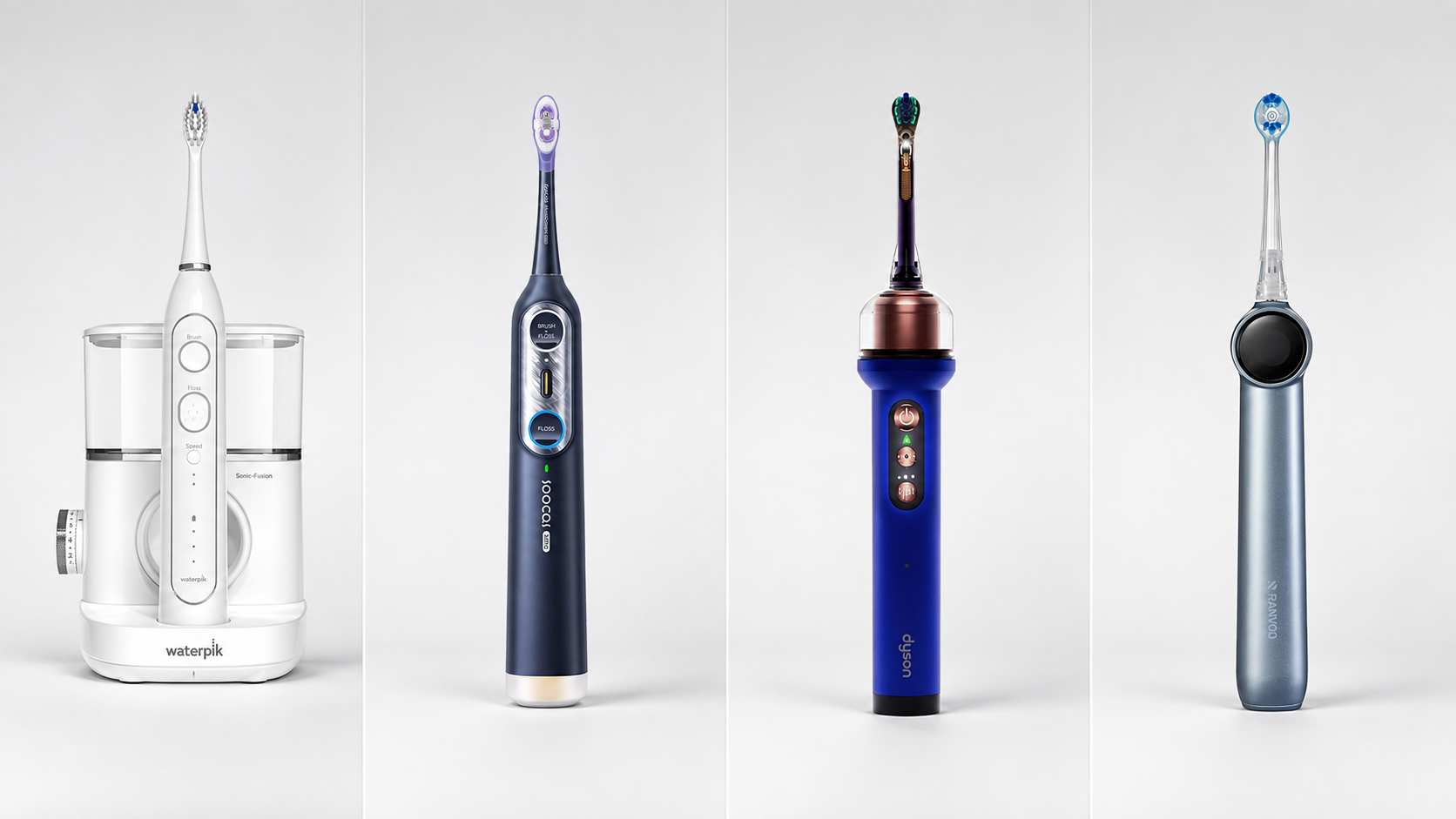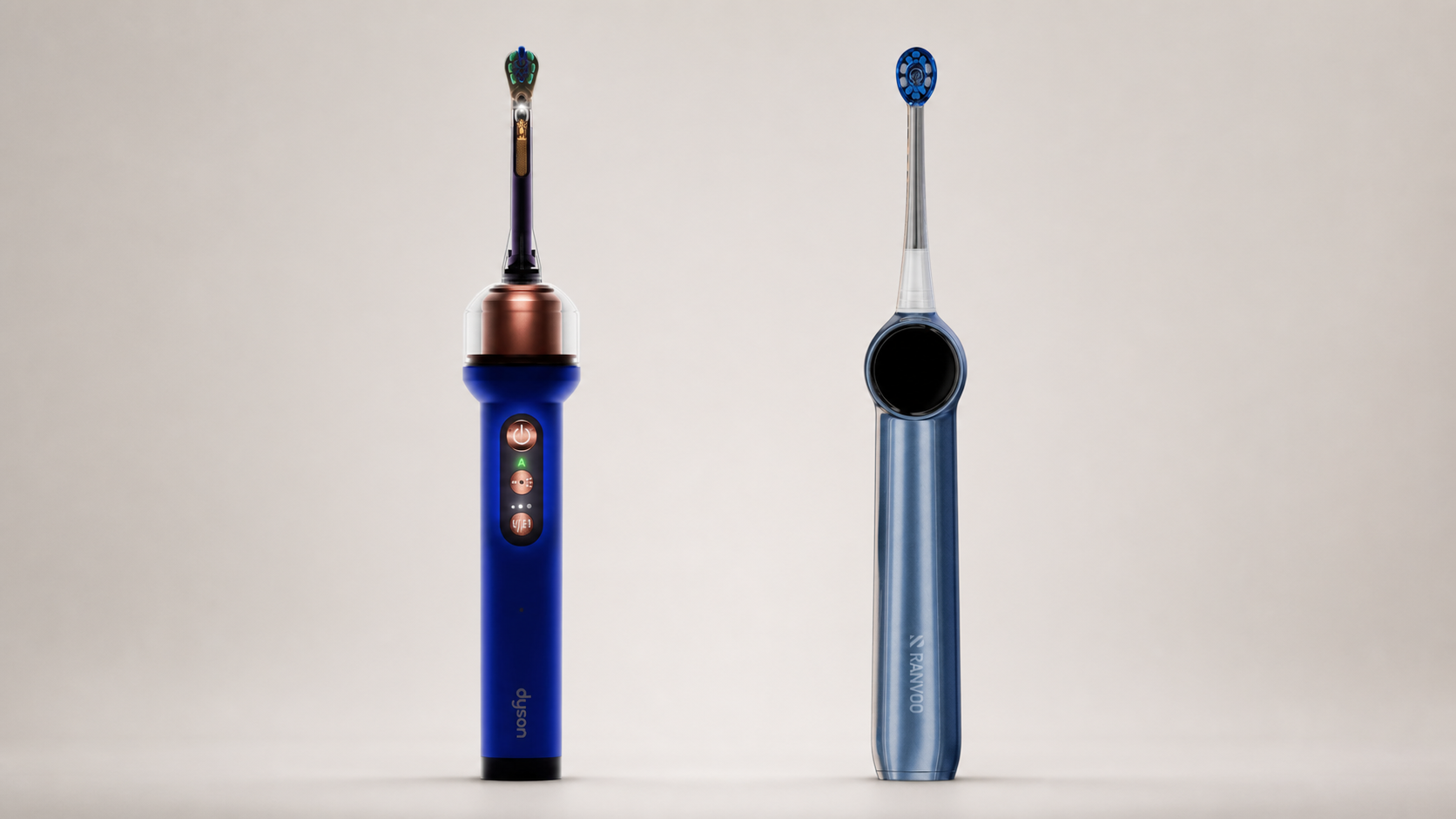

Sonic vs Oscillating Toothbrush

Sonic vs Oscillating Toothbrush

TL;DR: Both sonic and oscillating-rotating electric toothbrushes beat manual brushing hands down. But if you want the data-backed edge on plaque and gum health, oscillating-rotating brushes consistently show a small but significant advantage in clinical studies. The real winner, however, is the brush you'll use correctly for two full minutes, twice a day.

What Is the Difference Between Sonic and Oscillating Toothbrushes?

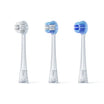
It comes down to the type of motion. An oscillating-rotating toothbrush uses a small, round brush head that physically rotates and pulsates to scrub each tooth. A sonic toothbrush vibrates side-to-side at very high speeds — up to 62,000 strokes per minute — creating a dynamic fluid action that pushes toothpaste and water between teeth and along the gumline.

The distinction is mechanical contact versus fluid pressure past the bristles. Understanding this helps explain why each excels in different situations.

A split-image comparing two electric toothbrush heads_ on the left, a small round oscillating-rotating brush head with visible bristle rotation; on the right, an elongated sonic brush head with blue liquid waves illustrating fluid dynamics.
Feature Oscillating-Rotating (Oral-B) Sonic (Philips Sonicare)
Motion Rotates and pulsates High-frequency side-to-side vibration
Brush Head Shape Small, round Elongated, multi-tufted
Cleaning Mechanism Direct mechanical scrubbing Fluid dynamics + bristle contact
Key Technique Guide over each tooth individually Gentle glide along the gumline

How Do Sonic and Oscillating Technologies Remove Plaque?

Plaque removal efficacy depends on disrupting the sticky biofilm that clings to enamel. Each technology takes a different path to that goal.

  • Oscillating-Rotating: The round head cups each tooth. The combined rotation-pulsation mechanically breaks up plaque on the surface. It shines in accessing hard-to-reach posterior zones and interproximal areas due to its compact size.
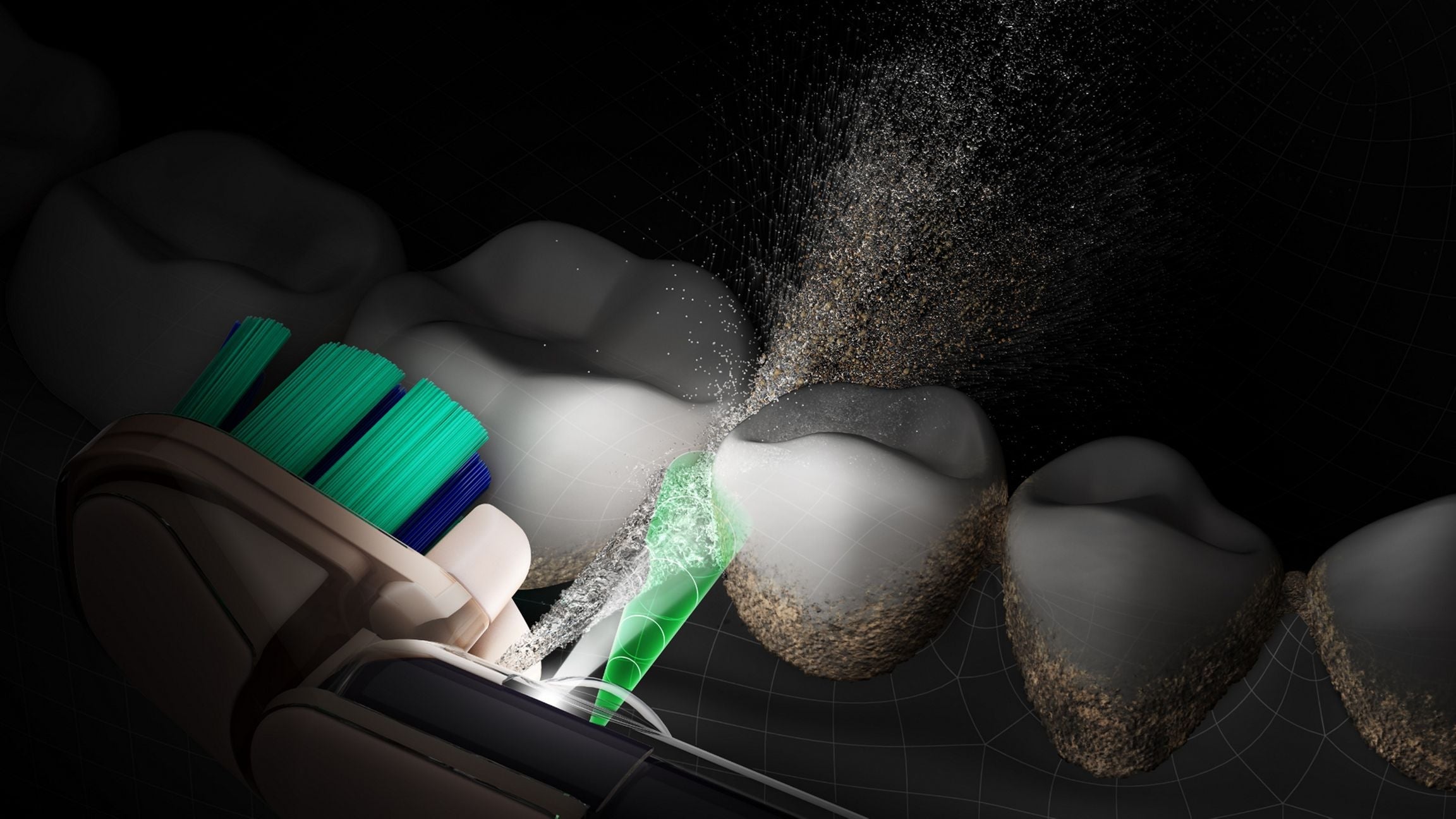
  • Sonic: Bristle vibration creates turbulence in the surrounding fluid. For example, the RANVOO AirJet X5 takes this a step further with its micro-bubble and water flow dual power technology, creating a dynamic fluid action that sweeps away plaque beyond bristle contact. This “non-contact” cleaning effectively flushes the gingival sulcus — the tiny pocket where tooth meets gum.

Which Brush Wins on Plaque Removal? A Look at the Clinical Evidence

The research isn't coy about this. While both technologies work well, a significant body of head-to-head trials shows oscillating-rotating brushes clearing more plaque.

An 8-week randomized trial found the oscillating-rotating brush delivered a 42.1% greater reduction in whole-mouth plaque versus a premium sonic brush after 4 weeks. In interproximal areas, the advantage was even higher at 159% greater reduction compared to sonic. Read the full study

Other key findings from independent meta-analyses:

  • A systematic review of 38 comparisons determined that oscillating-rotating brushes were significantly better at reducing plaque in 54% of all studies, measured by standard plaque index scores. Source
  • In a large 2024 meta-analysis, oscillating-rotating technology ranked first for plaque reduction (SUCRA score of 89.2%) compared to sonic (72.4%) and manual (18.3%) brushes. Source
  • The edge is especially clear in interproximal plaque — the debris between teeth. A systematic review noted that at 8 weeks, oscillating-rotating models removed significantly more plaque from these tight spaces. Source

Does Stain Removal and Whitening Performance Differ?

Both brush types will polish away surface stains from coffee and tea better than a manual brush. The difference lies in the mechanism.

  • Oscillating-Rotating: The mechanical polishing action of the rotating head can feel like a deeper, more targeted "scrub" on stained surfaces. Many models include a dedicated Whitening mode that uses a higher pulse frequency.
  • Sonic: The fluid dynamics and broad contact patch make it easier to achieve a uniform, all-over brightness. It is often reported to feel gentler while still lifting superficial stains.

Surface Stain Removal Checklist:

  • Brushes with a whitening or "clean" mode intensify the action.
  • Both require a whitening toothpaste for optimal results.
  • The small, round head of an oscillating brush allows for precise work on trouble spots.

Which Electric Toothbrush Is Better for Gum Health?

Here, the conversation flips from plaque to inflammation. Gingivitis reduction is where the data for oscillating-rotating brushes becomes most compelling.

  • Oscillating-Rotating Advantage:

    • A 12-week study showed an 11.7% greater reduction in gingivitis and a 19.8% greater reduction in bleeding sites versus a sonic brush. Source
    • One trial found that 84% of oscillating-rotating users transitioned to a healthy gingival status at 8 weeks, compared to just 53% of sonic users. Source
    • The pulsating action can be extremely effective at disrupting bacteria right at the gum margin.
  • Sonic Advantage:

    • The fluid dynamic pressure can flush bacteria from periodontal pockets without direct bristle contact, making it a gentle choice for inflamed gums.
    • The wider brush head and sweeping motion can provide a more uniform gumline cleaning for some users.

Can the Wrong Toothbrush Cause Gum Recession or Sensitivity?

Excessive force is the real enemy, not the technology itself. Pressing too hard and using stiff bristles will damage gum tissue over time, regardless of whether the toothbrush oscillates or vibrates.

Modern brushes mitigate this risk intelligently:

Risk Factor Oscillating-Rotating (Recent Models) Sonic
Over-brushing Pressure sensor stops pulsing and lights up red Pressure sensor reduces vibration intensity and changes pitch
Hard Bristles Use soft or "sensitive" brush heads only Use soft or "sensitive" brush heads only
Gum Sensitivity Sensitive mode lowers speed and pulse force Sensitive mode lowers vibration amplitude
Recession Risk Low, if the correct round head is guided individually and not scrubbed Low, due to the non-aggressive feel and gliding technique

When Should You Choose a Sonic Toothbrush?

You might find a sonic brush is your best match if you:

  • Have sensitive teeth and gums that flinch at a mechanical scrubbing sensation. The RANVOO AirJet X5, with its DuPont soft bristles and rubber-coated back, offers a gentle yet effective clean, perfect for sensitive mouths.
  • Wear braces or orthodontic appliances; the elongated head and fluid dynamics make it easier to clean around brackets.
  • Have dental implants or extensive crowns where a gentler, non-contact cleaning mechanism feels safer.
  • Prefer the sensation of a whole-mouth freshness and a tickling vibration that feels less invasive.
  • Want extended battery life; many sonic handles run for weeks on a single charge.

When Is an Oscillating-Rotating Toothbrush the Smartest Option?

An oscillating-rotating design will often be your smartest move if you:

  • Are focused on maximum plaque and gingivitis reduction based on clinical data.
  • Struggle with heavy plaque buildup in hard-to-reach back teeth and between teeth.
  • Want a tooth-by-tooth precision cleaning that feels deliberate and thorough.
  • Your dentist or hygienist has specifically recommended it to target problem areas with a proven, controllable tool.
  • Prefer a small, round brush head that can easily cup around each tooth's anatomy.

Why Dentists Often Prefer One Type Over the Other

There is no absolute winner in the dental community, but the clinical literature shows a clear lean.

The dentist's tip: “The best brush is the one the patient uses effectively. Overwhelmingly, we see slightly better compliance with a rotating, round head because it forces a user to think tooth-by-tooth. But if a sonic sensation gets you to brush for two minutes without missing spots, it’s the right tool for you.”

The American Dental Association (ADA) has awarded its Seal of Acceptance to both Oral-B's oscillating-rotating-pulsating models and select Philips Sonicare brushes. The seal confirms safety and efficacy, not superiority. In large meta-analyses, oscillating-rotating brushes show superior measures on plaque and gingivitis reduction, leading to a statistically significant clinical preference when analyzing populations. Source

How to Decide When You Have Specific Dental Work or Conditions

Your mouth's hardware should heavily influence your choice.

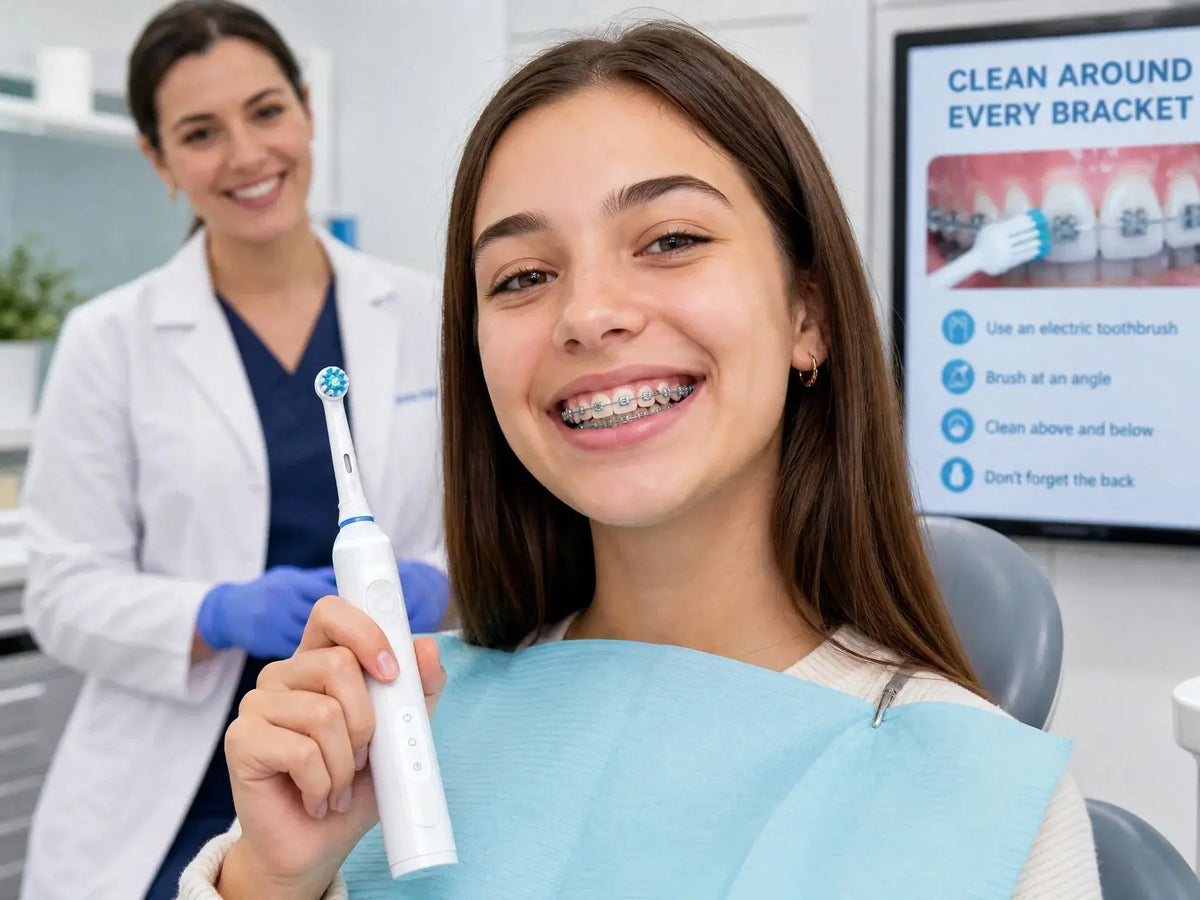
A dental patient with braces smiling while holding an electric toothbrush, demonstrating the challenge of cleaning around orthodontic brackets. Clinical setting, bright, modern, caring dentist in the background.

Condition-Based Decision Matrix:

  • Braces: Sonic. The fluid action cleans around brackets and wires where a rotating head may struggle or wear out faster.
  • Periodontal Pockets: Oscillating-Rotating. The physical pulsation effectively disrupts subgingival plaque in targeted pockets.
  • Dental Implants & Crowns: Sonic. Gentler, non-abrasive fluid cleaning is less likely to cause mechanical trauma around the restorative margin.
  • Heavy Interproximal Plaque: Oscillating-Rotating. Data consistently shows an advantage in cleaning between teeth.

Where Do Price, Features, and Long-Term Cost Fit Into the Decision?

The initial purchase is just the beginning. The replacement brush head cost adds up over time.

Cost Factor Oscillating-Rotating (e.g., Oral-B iO Series) Sonic (e.g., Philips Sonicare 4100/6100)
Brush Head Replacement Replace every 3 months. Smaller heads; often sold in multi-packs at a lower per-unit cost. Replace every 3 months. Proprietary elongated heads typically cost slightly more per replacement.
Smart Features High-end models offer AI position tracking via an app to coach your coverage. High-end models connect to an app for brushing feedback and pressure coaching.
Built-in Timer Standard: 2-minute timer with 30-second quadrant pacer. Standard: 2-minute timer with 30-second quadrant pacer.

The Final Verdict: How to Pick the Right Brush for Your Mouth

The "better" toothbrush is a personal equation defined by your specific oral health profile and daily habits.

  • Choose oscillating-rotating if your core goal is maximum plaque removal, bleeding-site reduction, and a tooth-by-tooth clean backed by a stronger body of clinical evidence.
  • Choose sonic if you prioritize a gentle, whole-mouth cleaning sensation, have lots of dental work, or wear braces and find fluid dynamics more comfortable. Consider models like the RANVOO AirJet X5, which combines sonic vibration with micro-bubble technology for a superior cleaning experience.

The single non-negotiable factor is correct use for two minutes, twice daily. Both technologies will fail if you apply too much pressure or miss your gumline. If you are still uncertain which technology fits the unique landscape of your mouth, book a conversation with your dental hygienist. They can watch your technique, identify your highest risk factors, and make a personalized recommendation that no online guide can match.

다음 보기

Can I Bring An Electric Toothbrush On Plane

FAQs

What is the difference between sonic and oscillating toothbrushes?

Sonic toothbrushes use high-frequency side-to-side vibration to create fluid dynamics that clean beyond bristle contact, while oscillating-rotating brushes use a small, round head that rotates and pulsates to mechanically scrub each tooth.

Which electric toothbrush removes more plaque?

Clinical studies show oscillating-rotating brushes consistently remove more plaque, especially between teeth, with one meta-analysis ranking it first with an 89.2% SUCRA score for plaque reduction compared to sonic's 72.4%.

Which toothbrush is better for gum health?

Oscillating-rotating brushes show greater reduction in gingivitis and bleeding sites; one study found 84% of such users achieved healthy gums at 8 weeks versus 53% with sonic.

Can using an electric toothbrush cause gum recession?

Excessive force is the main cause, not technology. Modern brushes have pressure sensors and soft bristle options to prevent damage.

Should I use sonic or oscillating toothbrush for braces?

Sonic brushes are recommended for braces because their fluid action cleans around brackets and wires more effectively without wearing out the brush head quickly.

Which toothbrush do dentists prefer?

While both types have ADA Seal of Acceptance, dentists often lean toward oscillating-rotating for its tooth-by-tooth precision and compliance benefits, but the best brush is the one you use correctly for two minutes twice a day.

What are the long-term costs of sonic vs oscillating brushes?

Replacement brush heads for oscillating models are typically cheaper per unit when bought in multi-packs, while sonic heads are proprietary and slightly more expensive; both need replacing every 3 months.

Do sonic toothbrushes whiten teeth?

Both types can remove surface stains; sonic brushes provide uniform brightness via fluid dynamics, while oscillating brushes offer targeted scrubbing with whitening modes.

References

A randomized controlled trial evaluating a novel oscillating-rotating electric toothbrush versus a sonic toothbrush for plaque and gingivitis https://assets.ctfassets.net/u2qv1tdtdbbu/7xbOa3OpH6wJnFPeKSrKw/ed1d3e70f4ae65bab7ff5062914b86ff/Adam_AJD_Feb_2025.pdf

The efficacy of an oscillating-rotating power toothbrush compared to a high-frequency sonic power toothbrush on parameters of dental plaque and gingival inflammation: A systematic review and meta-analysis https://pubmed.ncbi.nlm.nih.gov/35535635/

Comparative efficacy of electric toothbrush technologies in plaque and gingivitis reduction: a network meta-analysis. | Read by QxMD https://read.qxmd.com/read/42234020/comparative-efficacy-of-electric-toothbrush-technologies-in-plaque-and-gingivitis-reduction-a-network-meta-analysis

The Effect of Different Electric Toothbrush Technologies on Interdental Plaque Removal: A Systematic Review with a Meta-Analysis https://www.mdpi.com/2227-9032/12/10/1035

A randomized 12-week clinical comparison of an oscillating-rotating toothbrush to a new sonic brush in the reduction of gingivitis and plaque - PubMed https://pubmed.ncbi.nlm.nih.gov/25122979/

Evaluation of an oscillating-rotating toothbrush with micro-vibrations versus a sonic toothbrush for the reduction of plaque and gingivitis: results from a randomized controlled trial https://pubmed.ncbi.nlm.nih.gov/32243576/

A Meta-analysis Comparing Toothbrush Technologies on Gingivitis and Plaque - PubMed https://pubmed.ncbi.nlm.nih.gov/37481415/