Oral Care

Swollen Gums: Causes, Home Relief, and When to Seek Help

Swollen Gums: Causes, Home Relief, and When to Seek Help

TL;DR: Swollen gums are most often a sign of gingivitis — a reversible inflammation caused by plaque buildup along the gumline. Simple home care like saltwater rinses and gentle cleaning usually reduces swelling within a few days. If you also have severe pain, pus, a fever, trouble swallowing, or swelling that lasts beyond a week, you need to see a dentist right away. This guide breaks down exactly what’s happening, what you can do now, and when to get professional help.

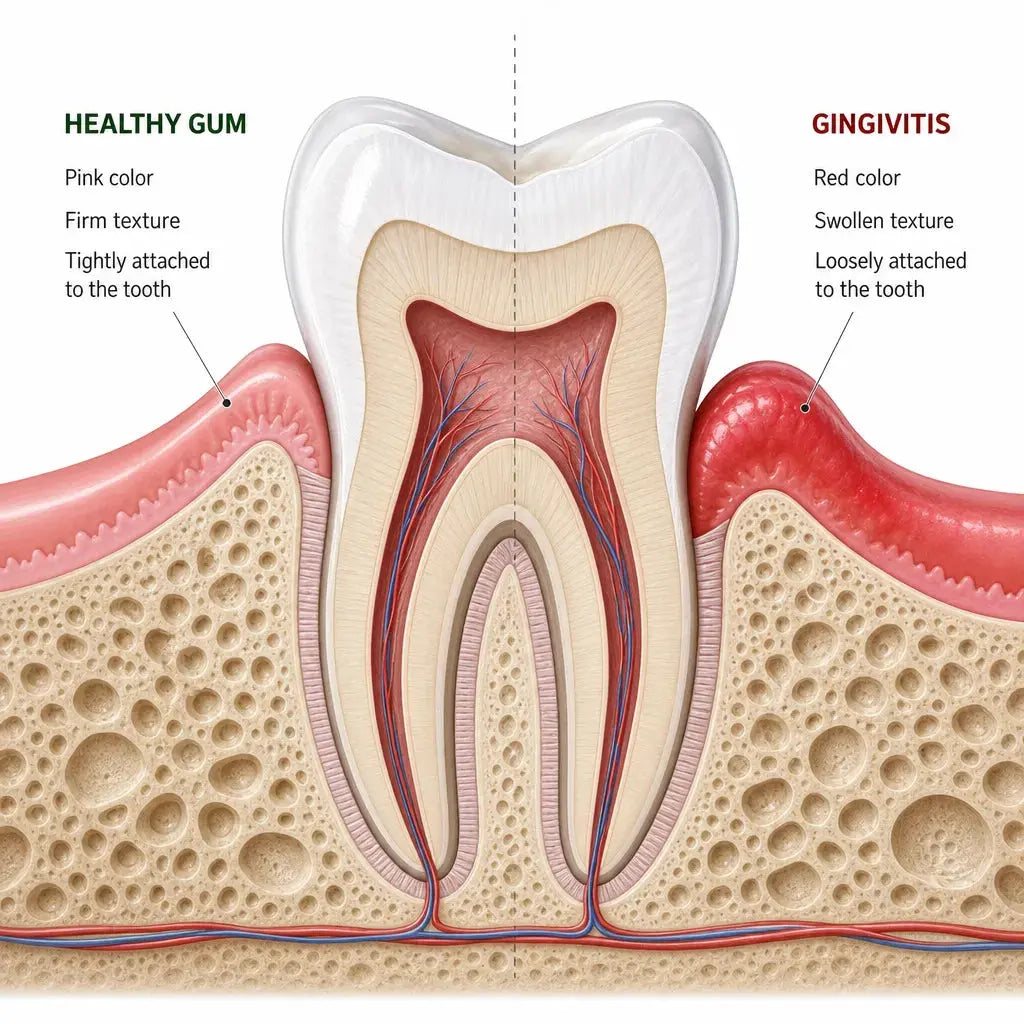
Comparative dental anatomy illustration showing healthy gums on the left — firm, pale pink, hugging teeth tightly — and swollen, inflamed gums on the right — red, puffy tissue pulling slightly away from the teeth, with visible irritation, clean medical style, white background, soft lighting

What You’re Feeling (And Why It’s Usually Manageable)

Waking up with puffy, tender gums can be unsettling. You might notice they look redder than usual, feel sore when you eat, or bleed a little when you brush. Those sensations are your body’s way of waving a small white flag — a signal that something is irritating the delicate tissue that holds your teeth in place.

Here’s the reassuring part: swollen gums are one of the most common oral health complaints, and in the vast majority of cases, they respond beautifully to simple, consistent care. The swelling itself is just inflammation, which means your immune system is actively working. That inflammatory response is often triggered by a buildup of plaque — a sticky, bacteria-laden biofilm that settles right where your teeth meet the gums.

When plaque isn’t removed thoroughly, the bacteria release byproducts that irritate the gum tissue. Your body responds by sending extra blood flow and immune cells to the area, causing the classic swelling, redness, and tenderness. A 2023 narrative review in Frontiers in Oral Health explains that microbial metabolites from dental plaque biofilm continuously provoke the host’s inflammatory reaction, setting the stage for what we feel as swollen gums.

Understanding this chain reaction takes away much of the fear. You’re not dealing with something mysterious — you’re dealing with a predictable, manageable biological response that you can influence directly with your daily habits.

Pinpointing the Cause: From Harmless to Harmful

Not all swollen gums are created equal. The key is to match what you feel with what might be causing it, so you know whether to reach for the salt or reach for the phone.

The Usual Suspect: Plaque-Induced Gingivitis

By far the most common culprit is gingivitis, a mild, completely reversible form of gum disease. If your gums bleed when you floss or brush, and the swelling feels diffuse rather than focused on one spot, gingivitis is highly likely. It means plaque has been sitting at the gumline long enough to kickstart inflammation, but it hasn’t yet damaged the bone or the ligaments that support your teeth.

A large systematic review published in 2023 revealed that periodontitis — the more advanced stage of gum disease — affects about 62% of dentate adults worldwide. That statistic underscores an important point: gingival inflammation is incredibly widespread, and catching it early, while it’s still just swollen gums, prevents progression to irreversible damage.

When It Might Be More Than Gingivitis

Look for specific clues that point toward something that needs faster attention:

  • Periodontitis: If the swelling is accompanied by receding gums, a bad taste in your mouth, loose teeth, or pockets forming between teeth and gums, the inflammation has moved deeper.
  • Gum abscess (periodontal abscess): A single painful, pimple-like bump on the gum that throbs or leaks pus signals a localized infection.
  • Pregnancy gingivitis: Hormonal shifts increase gum sensitivity and blood flow, often causing exaggerated swelling even with minimal plaque.
  • Medications: Drugs like calcium channel blockers, phenytoin, or cyclosporine can cause fibrous gum overgrowth that goes beyond simple inflammation.
  • Vitamin C deficiency: Severely low vitamin C impairs collagen production, weakening gum tissue and leading to swollen, bleeding gums.
  • Systemic illness: In rare cases, leukemia or autoimmune disorders present with boggy, swollen gums that don’t improve with hygiene.

A good rule of thumb: if the swelling comes on after a few days of slacking on brushing or flossing, it’s likely plaque-driven. If it appears suddenly alongside other symptoms like fatigue, unexplained bruising, or a fever, involve a medical professional right away.

Home Relief: Safe Steps to Reduce Swelling Quickly

When you notice puffiness, you want relief now. These steps are safe, effective, and you can start them immediately.

1. Saltwater Rinse

Mix half a teaspoon of salt in a cup of warm water. Swish gently for 30 seconds and spit. Saltwater creates a hypertonic environment that can help soothe inflamed tissue and temporarily reduce microbial load.

2. Cold Compress

Wrap an ice pack or a bag of frozen peas in a thin cloth and hold it against your cheek near the swollen area for 10–15 minutes. The cold narrows blood vessels, which numbs pain and visibly reduces puffiness.

3. Ultra-Gentle Cleaning

The last thing swollen gums need is aggressive scrubbing. Use a soft-bristled toothbrush, hold it at a 45-degree angle to the gumline, and move it in small circular motions — letting the bristles, not pressure, do the work. Floss gently, curving the floss against each tooth rather than snapping it against the gums.

4. Over-the-Counter Helpers

  • Alcohol-free antimicrobial mouthwash: A rinse containing ingredients like cetylpyridinium chloride or diluted hydrogen peroxide can reduce bacteria without the sting. Therapeutic-use mouthwashes with chlorhexidine are highly effective — a 2025 randomized clinical trial confirmed that chlorhexidine mouthwash significantly reduces plaque and gingival inflammation — but these are best reserved for short-term use under a dentist’s guidance.
  • Benzocaine gels: Over-the-counter numbing gels can provide temporary pain relief. Apply only a small amount directly to the swollen area and do not use for more than a few days without consulting a professional.

Realistic expectations: For mild, plaque-driven swelling, you should notice a clear improvement within 1–3 days of consistent care. If the swelling stays the same or gets worse, that’s your cue to move from home care to professional care.

Close-up medical illustration of dental plaque biofilm forming along the gumline, with arrow labels pointing to bacterial accumulation and an inflamed gingival margin, soft blue and pink tones, clinical diagram style

Danger Signs: When to Call the Dentist Right Away

Your body has a way of telling you when a problem is bigger than a little inflammation. Don’t ignore these red flags:

  • Swelling that lasts beyond a week despite improved home care.
  • Severe, throbbing pain that interferes with sleep or eating.
  • Pus or a foul taste draining from between the tooth and gum.
  • A fever accompanying the swelling.
  • Loose teeth or a sensation that your bite has changed.
  • Difficulty swallowing or breathing — this demands emergency care.

These symptoms indicate the infection may have spread beyond the gum line into deeper support structures or even the facial spaces. Left untreated, a dental abscess can lead to bone loss and, in extreme situations, life-threatening complications. If you flagged any of these during your self-assessment, skip the home remedies and call your dentist immediately.

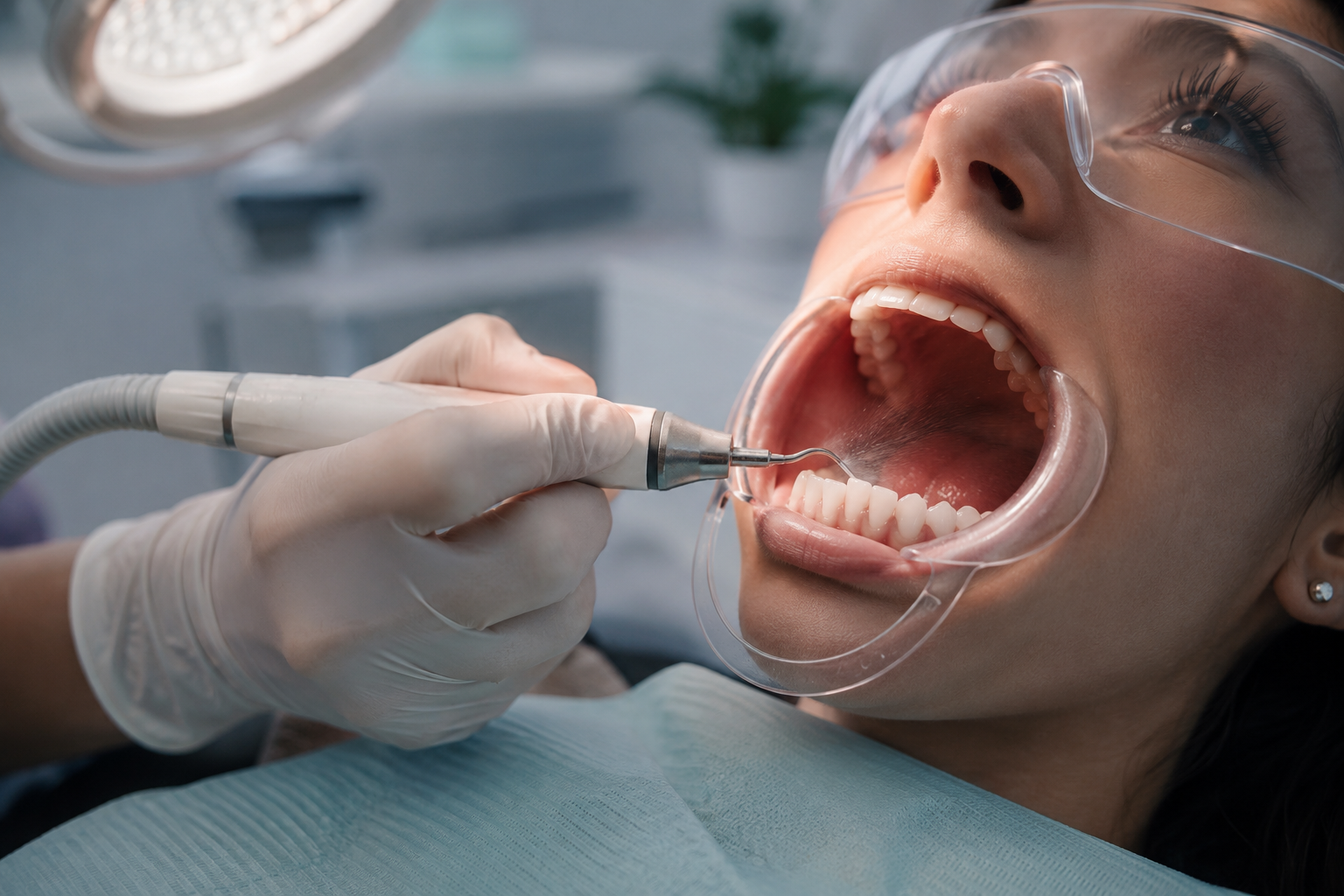
Early professional intervention — typically a deep cleaning (scaling and root planing) to remove hardened tartar and bacteria from below the gumline — can stop periodontitis in its tracks and save teeth that might otherwise be lost.

Long-Term Care: Keep Your Gums Healthy for Good

Preventing future swelling doesn’t require a complicated regimen. It runs on a few daily, non-negotiable actions.

Brush correctly, every single day. Use a soft-bristled brush angled toward the gumline. The goal is to break up plaque before it hardens into tartar. Switching to a sonic electric toothbrush can deliver thousands of micro-movements per minute, effectively clearing plaque along the gumline without the risk of over-brushing. A power toothbrush with a pressure sensor will also alert you if you’re pressing too hard, protecting already sensitive gums while they heal.

Floss or clean between teeth daily. Curve the floss into a C-shape and slide it gently below the gumline. If flossing is tricky, an oral irrigator (water flosser) can reduce bleeding and swelling by flushing out debris that feeds bacteria.

Schedule regular dental cleanings. Professional removal of tartar every six months — or more often if you’re prone to buildup — breaks the cycle of inflammation.

Address the bigger picture. Control blood sugar if you have diabetes, avoid tobacco, and stay hydrated. Even chronic periodontitis is highly manageable with consistent professional care and a solid home routine. Swollen gums are your early-warning system; once you learn to respond quickly, you take back control of your oral health.


A relaxed person smiling in a bathroom, holding a small cup of salt water with gentle morning light streaming in, clean and soothing atmosphere, lifestyle photography, soft natural colors

다음 보기

How to Get Rid of Gingivitis
Bad Breath (Halitosis): Causes, Treatments, and Prevention

FAQs

What are the common causes of swollen gums?

Swollen gums are most often caused by plaque buildup leading to gingivitis. Other causes include periodontitis, gum abscesses, pregnancy gingivitis, certain medications (like calcium channel blockers), vitamin C deficiency, and systemic illnesses such as leukemia.

How can I quickly reduce swollen gums at home?

Rinse with a warm saltwater solution (half teaspoon of salt in a cup of water), apply a cold compress to the cheek for 10–15 minutes, and clean teeth ultra-gently with a soft-bristled toothbrush. Over-the-counter alcohol-free antimicrobial mouthwash or benzocaine gel may also provide temporary relief.

When should I see a dentist for swollen gums?

See a dentist if swelling persists beyond a week, you have severe throbbing pain, pus or a foul taste, fever, loose teeth, or difficulty swallowing or breathing. These are red flags for a more serious infection.

What is the difference between gingivitis and periodontitis?

Gingivitis is a reversible inflammation of the gums caused by plaque, with symptoms like bleeding when brushing and diffuse swelling. Periodontitis is a more advanced stage where the inflammation has moved deeper, causing receding gums, bad taste, loose teeth, and possible bone loss. Gingivitis can progress to periodontitis if left untreated.

Can pregnancy cause swollen gums?

Yes, hormonal shifts during pregnancy increase gum sensitivity and blood flow, often leading to swollen gums even with minimal plaque. This is known as pregnancy gingivitis.

What does a gum abscess feel like?

A gum abscess appears as a single painful, pimple-like bump on the gum that may throb or leak pus. It indicates a localized infection that requires dental attention.

Is it safe to brush swollen gums?

Yes, but you should use a soft-bristled toothbrush and gentle circular motions at a 45-degree angle to the gumline. Avoid aggressive scrubbing, which can worsen irritation.

How long does it take for swollen gums to heal with home care?

For mild, plaque-driven swelling, you should see clear improvement within 1–3 days of consistent home care. If the swelling persists or worsens, consult a dentist.

What kind of mouthwash can I use for swollen gums?

Alcohol-free antimicrobial mouthwashes containing cetylpyridinium chloride or diluted hydrogen peroxide can reduce bacteria without stinging. Chlorhexidine mouthwash is highly effective but should be used short-term under a dentist’s guidance. Benzocaine gels can also provide temporary pain relief.

How can I prevent swollen gums in the long term?

Brush correctly twice a day with a soft or sonic electric toothbrush, floss daily, get regular dental cleanings every six months, control blood sugar if diabetic, avoid tobacco, and stay hydrated.

References

Microbial metabolites in the pathogenesis of periodontal diseases: a narrative review https://www.frontiersin.org/journals/oral-health/articles/10.3389/froh.2023.1210200/pdf

Prevalence of periodontitis in dentate people between 2011 and 2020: A systematic review and meta-analysis of epidemiological studies - PubMed https://pubmed.ncbi.nlm.nih.gov/36631982/

Efficacy of 0.12% chlorhexidine mouthwash containing 0.001% EDTA versus commercially available chlorhexidine mouthwash in minimizing tooth staining: a randomized clinical trial | BMC Oral Health | Springer Nature Link https://link.springer.com/article/10.1186/s12903-025-07437-6